Daily Activities for an Easier Birth
Preparing for birth is not just about what happens on labor day. The small things you do consistently during pregnancy can have a big impact on how your body feels, how baby settles into the pelvis, and how efficiently labor unfolds.
Supporting balance, efficiency, and comfort throughout pregnancy
Your pelvis is designed to move. The muscles, ligaments, and joints surrounding it respond to posture, movement, and tension patterns. When those areas stay balanced and mobile throughout pregnancy, labor often feels more productive and less exhausting.
An easier birth is not about forcing outcomes or doing everything perfectly. It is about creating space, balance, and flexibility so your body can work with contractions rather than against them.
Below are simple daily activities we often recommend to support pelvic balance, comfort in pregnancy, and efficiency in labor.
Walking With Intention
Aim for about 30 minutes a day
Walking is one of the most supportive daily activities in pregnancy, especially when done with relaxed, longer strides rather than short, tight steps.
Intentional walking helps:
Lengthen the hip flexors and inner thighs
Encourage gentle, rhythmic pelvic movement
Support baby’s descent and positioning
Reduce stiffness in the lower back
Walking also supports circulation and nervous system regulation, both of which play a role in how labor begins and progresses. If 30 minutes at once feels like too much, breaking it into shorter walks still counts
Calf Stretching
2 to 3 times per day, for 2 to 3 minutes
Calf tightness is often overlooked, but the calves are connected through fascial lines that influence pelvic tension and posture.
Stretching the calves can:
Reduce tension that travels upward into the pelvis
Improve overall posture and alignment
Support a more relaxed pelvic floor
A simple way to stretch is by placing a rolled-up towel, yoga mat, or cut pool noodle under the ball of the foot and gently leaning forward until you feel a stretch. Switch sides and repeat. This stretch can be especially helpful in late pregnancy.
Supported Squats
5 to 10 per day
Squats help maintain flexibility and strength in the hips, pelvis, and legs, all of which are heavily involved in labor.
Supported squats can:
Encourage opening at the pelvic inlet
Strengthen muscles used during labor and birth
Improve awareness of pelvic movement
Using a chair, wall, or partner for support allows you to stay relaxed and avoid strain. The goal is comfort and consistency, not depth or intensity.
Forward Lunges
3 lunges on each side per day
Forward lunges create gentle asymmetry in the pelvis, which is helpful for balancing the muscles that guide baby’s rotation and descent.
Lunges support:
Hip flexor lengthening
Pelvic balance side to side
Baby’s ability to settle into an optimal position
Move slowly, use support as needed, and focus on steady breathing rather than pushing through the movement.
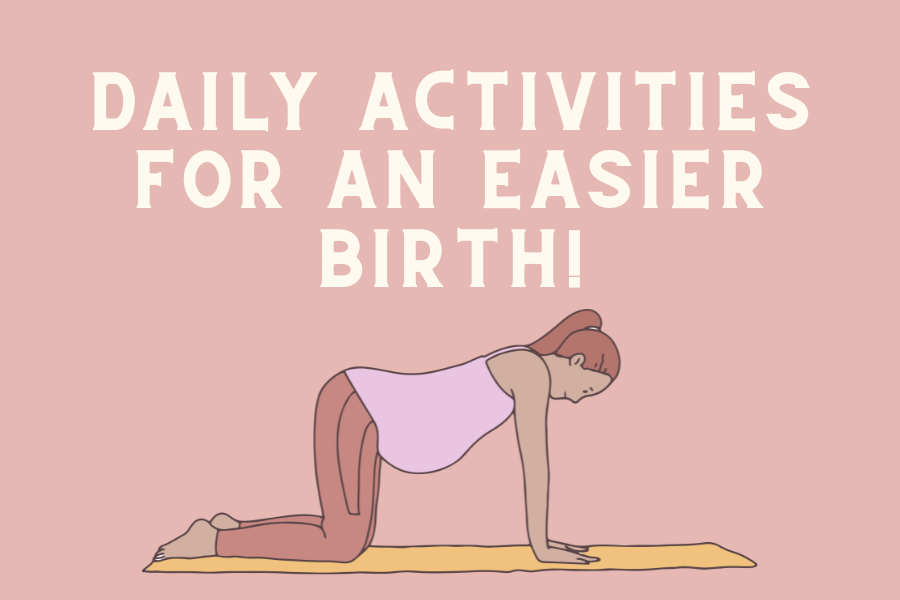
Pelvic Tilts (Cat Cow)
20 to 30 repetitions slow and gently per day
Pelvic tilts, often done in a hands-and-knees position, help keep the spine and pelvis mobile and responsive.
Cat/ Cow movements help by:
Encouraging sacral mobility
Relieving lower back tension
Supporting baby’s rotation and positioning
This movement can feel soothing, especially at the end of the day or when your back feels heavy or tight.
Seated Hip Openers
1 to 3 times per day, 3 breaths on each side or until you feel a release
Seated hip openers help soften and lengthen the muscles around the pelvis, particularly the inner thighs and hip rotators.
These stretches support:
Pelvic flexibility
Reduced tension in the hips and groin
Easier movement and positioning in labor
Move gently and stay only as long as the stretch feels productive and comfortable.
Why Daily Movement Matters for Birth
Labor works best when the body is balanced and adaptable. Tight or restricted muscles can make contractions feel intense without being efficient. When the pelvis and surrounding muscles can move freely, contractions often work more effectively to help baby descend and rotate.
These daily activities support:
More efficient contractions
Better use of gravity and movement
Less fatigue during labor
Increased confidence in how your body moves
Consistency matters more than perfection. Even a few of these movements done regularly can make a meaningful difference.
How This Connects to Birth Positions and Spinning Babies
The movements you practice during pregnancy often become the positions that feel most natural during labor. Understanding why certain positions work, and when to use them, can help labor feel more intentional and grounded.
In our Spinning Babies Couse, we focus on balance, gravity, and movement to help babies navigate the pelvis more easily. In class, we go deeper into:
Why these daily activities support labor efficiency (with even more daily activity movements and options)
How pelvic shape changes with different positions
What positions work best at different stages of labor
How partners can support movement and comfort during pregnancy and labor
Rather than memorizing positions, you learn how to respond to your body and your baby in real time.
If you want to understand how daily movement supports birth positioning and labor progress, our Spinning Babies class is a powerful next step.
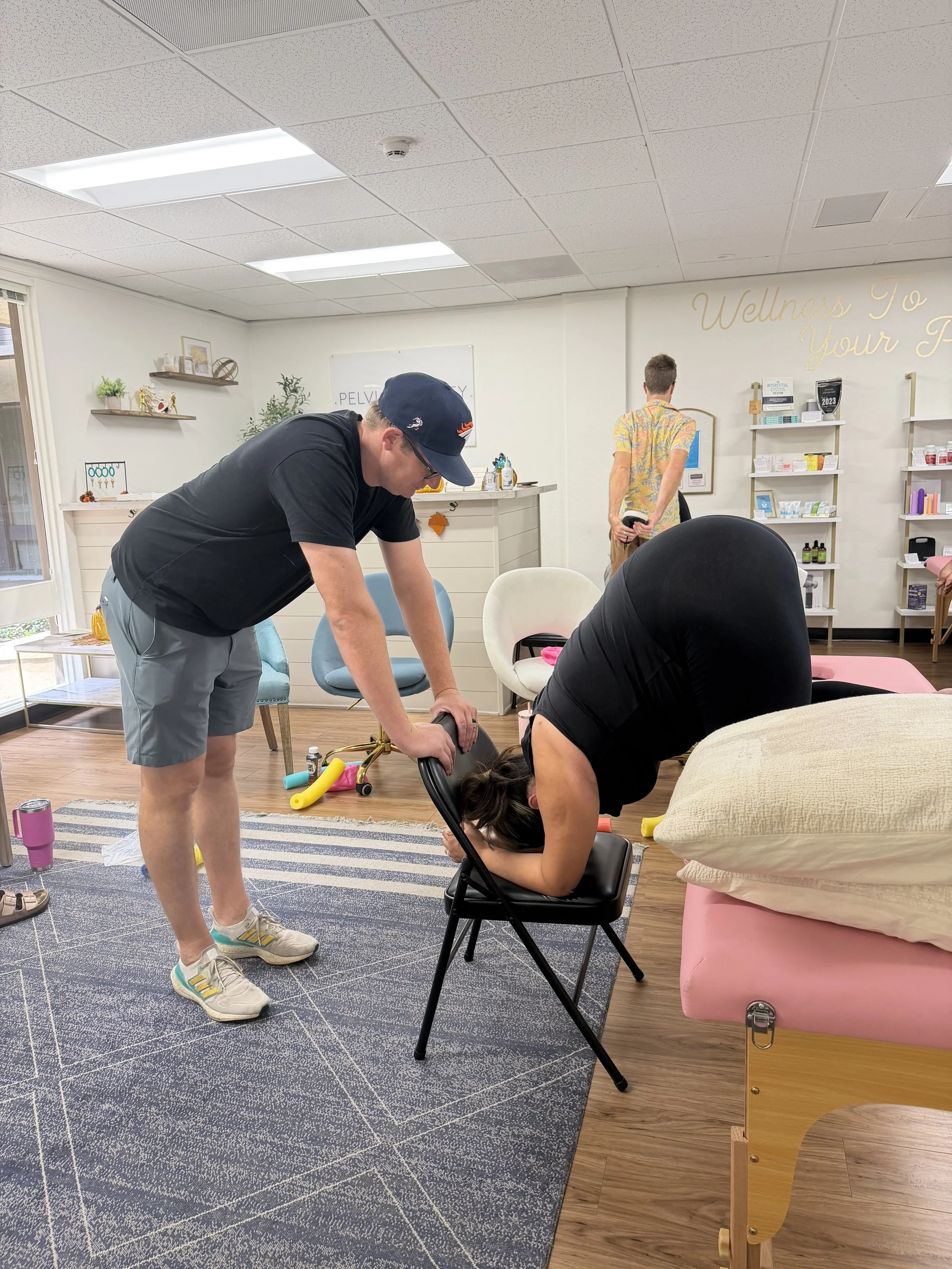
We hope this blog helps you get some more movement in your day and supports your birth journey. Can’t wait to see you in our Spinning Babies Class!