What to Do in Early Labor and Why It Matters
Early labor can feel confusing. Contractions may be irregular, sensations may come and go, and many parents wonder, Should I be doing something right now or just waiting?
Early labor is not just a waiting period. It is an important phase where your body is laying the foundation for active labor. What you do during this time can influence comfort, progress, and how supported you feel when labor intensifies.
Understanding why early labor works best when you feel safe, comfortable, and supported can help you move through this stage with more confidence and less stress.

The Science Behind Early Labor at Home
Labor is governed by hormones, not willpower. One of the most important hormones in labor is oxytocin, often called the “love hormone.” Oxytocin helps contractions (surges) become stronger, more coordinated, and more effective.
Oxytocin flows best when:
You feel safe and unobserved
You are relaxed and comfortable
Your environment feels familiar
You are not rushed, stressed, or anxious
This is why early labor often progresses more smoothly at home. Familiar spaces, dim lighting, comfort items, and freedom to move all support the hormonal flow that helps labor unfold.
When someone feels tense, afraid, or overstimulated, the body releases adrenaline. While adrenaline is helpful in emergencies, it can slow or stall labor when released too early. Staying home in early labor, when appropriate, gives your body time to build momentum naturally.
Why Comfort Actually Helps Labor Progress
Comfort in labor is not about “making it painless.” It is about helping contractions work efficiently rather than just feeling intense.
When the body is relaxed:
Muscles soften and lengthen
The pelvis moves more freely
Blood flow improves
Contractions tend to become more coordinated
Discomfort that is unmanaged often leads to tension, shallow breathing, and exhaustion. Comfort measures help interrupt this cycle and allow the body to do what it already knows how to do.
Favorite Comfort Measures for Early Labor
TENS Unit
A TENS unit (Transcutaneous Electrical Nerve Stimulation) is one of our favorite early labor tools.
A TENS unit works by sending gentle electrical impulses through pads placed on the lower back. These impulses:
Block pain signals from reaching the brain
Stimulate endorphin release
Provide a consistent sensation that many find grounding
TENS units are especially helpful in early labor because they can be started early, used continuously, and adjusted as sensations change. Many birthing people report that a TENS unit helps them stay relaxed and mobile during the early phase.
This is a great tool to combine with movement, breathing, or rest.
Movement and Position Changes
Movement helps labor progress by encouraging pelvic mobility and supporting baby’s descent.
In early labor, this may look like:
Walking
Swaying hips
Gentle squats
Sitting on a birth ball (quick fast circles when baby is still high up)
Standing and leaning forward
There is no single “right” movement. The best movement is the one that feels instinctive and comfortable in your body.
Warmth and Water
Heat helps muscles relax and can significantly reduce discomfort.
Try:
Warm showers
Heating pads on the lower back
Warm compresses
Warm water also has a calming effect on the nervous system, which supports oxytocin release.
Touch and Counterpressure
Supportive touch from a partner or doula can help signal safety to the nervous system.
This might include:
Firm pressure on the lower back
Hip squeezes
Gentle massage
Holding hands or leaning into your partner
Touch is not just physical support. It is emotional reassurance, which matters deeply in early labor. This is something we teach in all our childbirth education classes or ask your birth doulas to demonstrate with your birth partner while you’re planning.
How Spinning Babies Can Help in Early Labor
Spinning Babies focuses on balance, gravity, and movement to help baby navigate the pelvis more easily. Early labor is an excellent time to incorporate these techniques.
Spinning Babies principles can help:
Encourage optimal fetal positioning
Create balance in the pelvic muscles and ligaments
Reduce unnecessary tension
Support smoother progress as labor intensifies
In early labor, gentle movements such as:
Forward-leaning positions
Side-lying release
Pelvic tilts
Asymmetrical positions
can help baby settle into a more favorable position before contractions become stronger.
This approach is not about forcing baby into place. It is about creating space and balance so baby can move more easily.
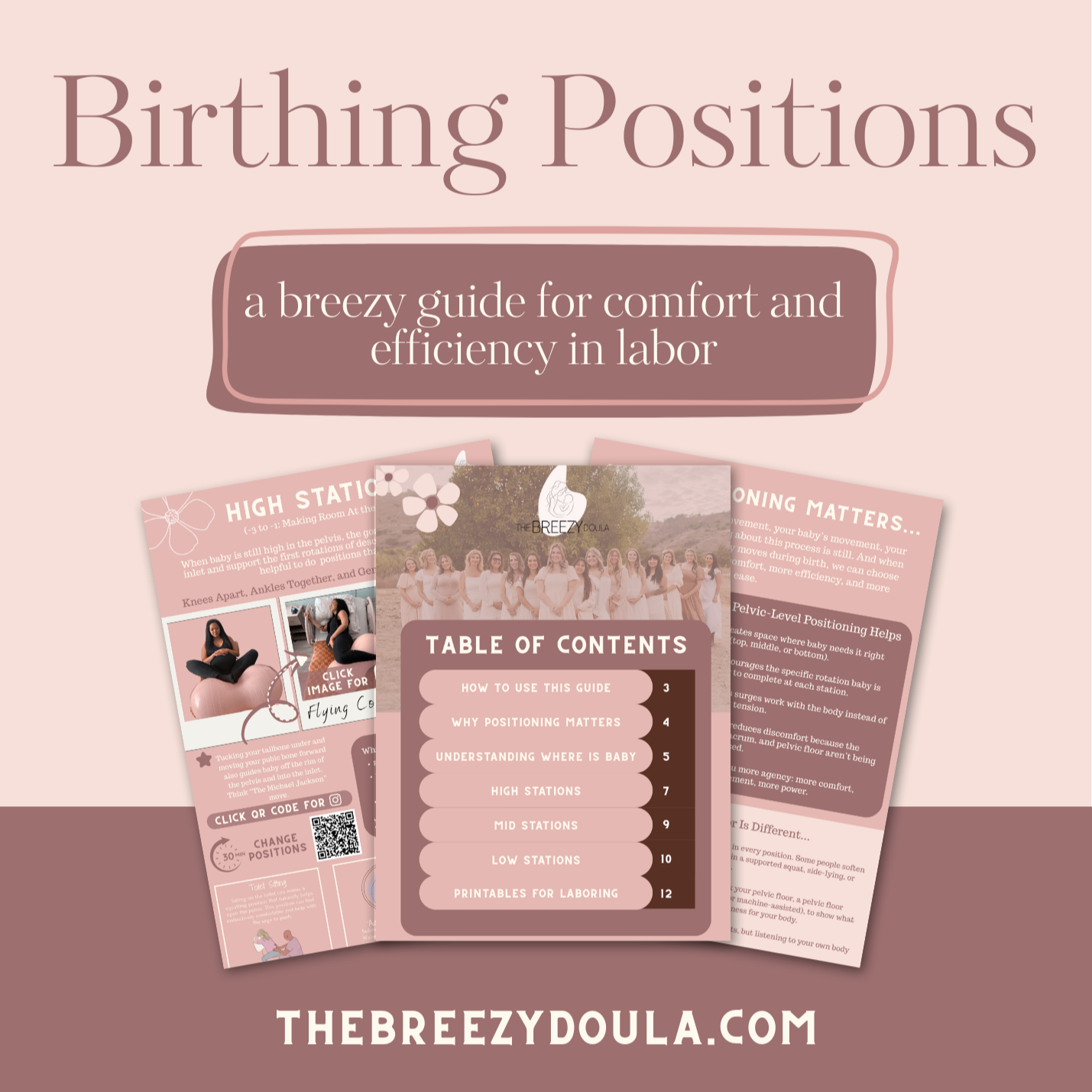
A breezy guide for comfort and efficiency in labor. This is the most comprehensive guide on what positions to use and when to use them. Our guide also INCLUDES an easy reference printable for your labor folder. Get a better understanding as to why these positions work and how to get the comfort you deserve in birth!
The Role of a Doula in Early Labor
Early labor is often when families feel the most unsure. A doula provides reassurance, perspective, and guidance during this phase.
Your doula can:
Help you decide when to stay home versus when to go in
Offer real-time comfort suggestions
Support your partner so they know how to help
Encourage rest, nourishment, and hydration
Help you conserve energy for active labor
Having someone experienced walk with you through early labor can reduce anxiety and prevent unnecessary early admissions, which often leads to more interventions later.
What Early Labor Is Really For
Early labor is about:
Building confidence
Allowing your body to warm up
Helping baby find their way through the pelvis
Creating a calm foundation for the rest of labor
You do not need to rush this stage. When supported well, early labor can feel grounding, manageable, and even empowering.
Listening to your body, staying comfortable, and surrounding yourself with support can make a meaningful difference in how labor unfolds. We are so excited for you and feel free to reach out to us for any support you need.