How to Turn a Breech Baby Naturally: Spinning Babies, Webster Technique & More
Hearing that your baby is in a breech position can feel overwhelming. But here’s the truth. Breech is a variation of normal, and you still have options.
There are gentle, evidence-informed ways to encourage your baby to rotate head-down, and many families are able to support this process naturally. Let’s walk through what this means and what you can do.
What Does Breech Mean?
A breech baby is positioned with their bottom or feet down instead of their head.
Most babies naturally turn head-down between 32 to 37 or 38 weeks, but babies can turn even later, sometimes right up until birth and occasionally even during labor.
Why Baby’s Position Matters
Your baby’s position can influence how efficiently they move through the pelvis during labor. When baby is head-down and well-positioned, labor often flows more smoothly.
When baby is breech, your care team may begin discussing options with you, but it’s important to remember:
The goal is not to force your baby to turn.
The goal is to create space and balance in your body so your baby can move if they are able to.
Why Spinning Babies Techniques Work
Spinning Babies is built on a simple concept:
Balance the body → Create space → Let baby move
Instead of trying to physically “flip” your baby, these techniques:
Release tension in muscles and ligaments
Improve alignment in the pelvis
Use gravity to encourage movement
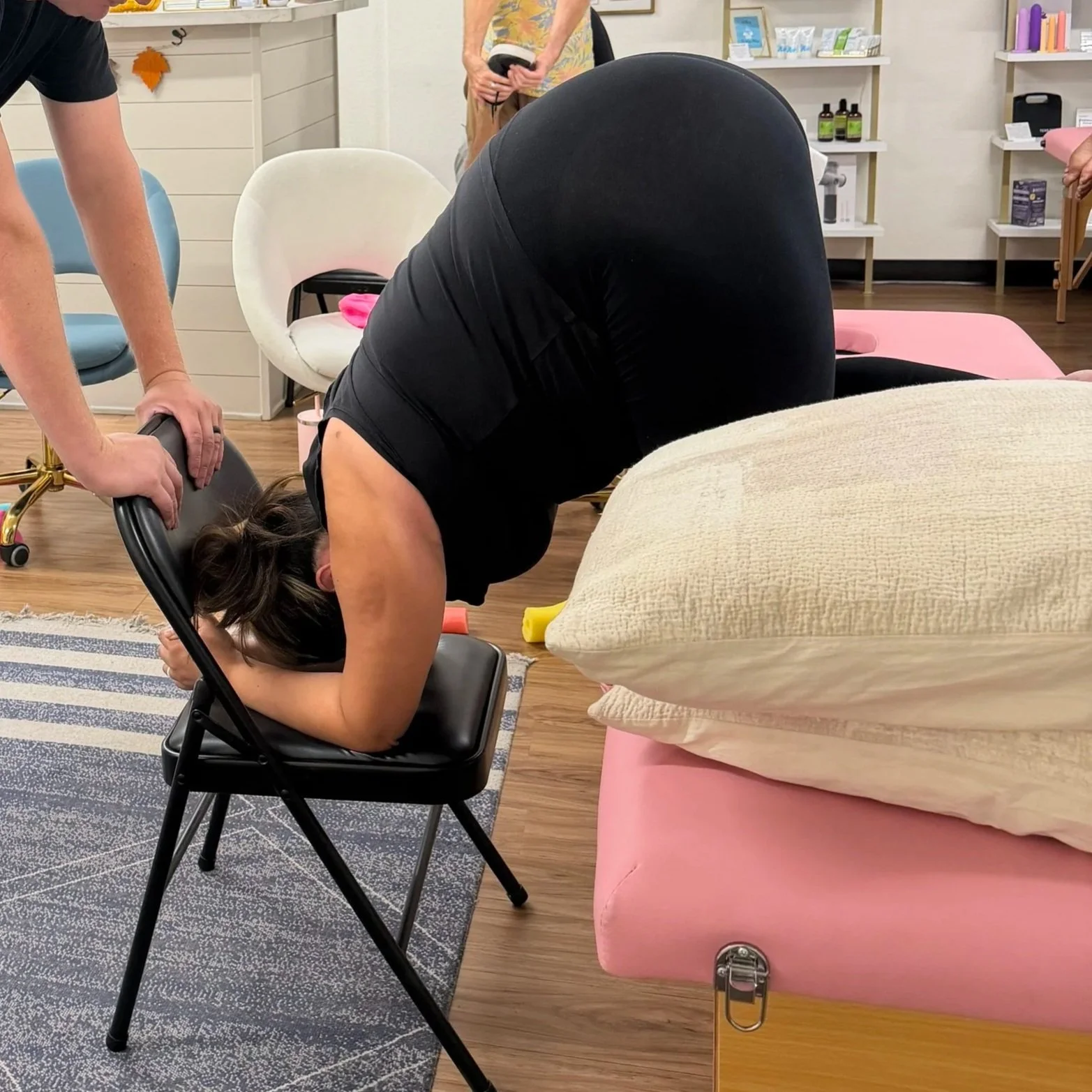
One commonly recommended approach is doing 7 forward-leaning inversions within 24 hours, which can help temporarily shift the uterus and give baby more room to reposition.
In our Spinning Babies classes, we teach families how to support baby’s positioning through simple, intentional daily movement. We walk through the Three Balances, everyday activities, and specific birthing positions that help create more ease and alignment in the body. By focusing on balance, the use of gravity, and purposeful movement, these techniques often create the space baby needs to rotate into a more optimal position. Our goal is to give you practical, easy-to-use tools so you feel confident supporting your body and your baby throughout pregnancy and birth.
Chiropractic Care (Webster Technique)
Chiropractic care during pregnancy can be incredibly supportive, especially when working with a provider trained in the Webster Technique.
The Webster Technique focuses on:
Balancing the pelvis
Reducing tension in the surrounding ligaments
Creating more space for baby
This is not about aggressive adjustments or “popping.”
It is gentle and pregnancy-focused care.
It is important to see a chiropractor who is Webster certified, as they have additional training in working with pregnant bodies and breech positioning.
Rebozo Technique
The rebozo technique uses a long cloth to gently sift and support the belly.
This can:
Relax tight muscles
Reduce tension around the uterus
Encourage baby to reposition
It’s often deeply calming and can be done with the support of a doula or trained provider.
Forward Leaning (Polar Bear Position)
The forward-leaning or “polar bear” position helps as a softer version of the Spinning Babies Forward Leaning Inversion:
Take pressure off the lower back
Shift baby’s weight forward
Create more room in the pelvis
This position uses gravity to gently encourage better alignment.
Moxibustion
Moxibustion is a traditional Chinese medicine technique used to encourage breech babies to turn.
It involves applying gentle heat to a specific acupuncture point on the pinky toe.
This stimulation is thought to:
Increase fetal movement
Encourage hormonal responses that support turning
It is often done under the guidance of a trained provider and may be combined with acupuncture.
Acupuncture
Acupuncture can support breech positioning by:
Promoting relaxation
Improving circulation
Supporting overall balance in the body
It is often paired with moxibustion for a more targeted approach.
Hypnosis & Fear Release
Your mental and emotional state matters more than most people realize.
Hypnosis and fear-release techniques can help:
Reduce tension in the body
Calm the nervous system
Create a sense of safety and openness
When the body feels safe, muscles soften, and this can create more space for baby to move.
External Cephalic Version (ECV)
An external cephalic version (ECV) is a medical procedure performed by an OB/GYN.
During an ECV:
One provider uses their hands to manually guide the baby into a head-down position
Ultrasound is used to monitor baby throughout the process
While this can be effective, it’s important to know:
It may not always work
Even if successful, baby may still turn back
It can be an uncomfortable experience
This is a personal decision and something to discuss thoroughly with your provider.
What If Baby Doesn’t Turn?
Note that not all babies turn.
And sometimes, it may not be the safest option for baby to turn.
The most important thing is not just baby’s position, but having a supportive and experienced care team.
Many babies can be born calmly and safely in the breech position with the right provider.
If your baby remains breech, you deserve to:
Understand your options
Feel supported in your choices
Have access to providers experienced in breech birth
Breech is not a failure. It’s not something you caused. It’s simply one variation of how babies can position themselves for birth.
There are many ways to support your body and encourage baby to turn, but no matter what happens, you deserve care that feels informed, and supportive. If you are navigating a breeched birth, reach out to our team to get doula support and guidance. Many of our moms have gone through the same experience and said that having a doula has made their journey less scary and much more grounded.