

The Fear-Tension-Pain Cycle: Understanding How Fear Affects Labor
Have you ever wondered why the same contraction can feel completely different depending on how you are feeling?
One of the most important things we teach in childbirth education is that birth isn't just physical. Your brain, nervous system, emotions, environment, and support system can all influence how you experience labor.
We don’t mean you just “think” your way into an easy Breezy birth. Labor is intense, and pain is a normal part of the process. But understanding the relationship between fear, tension, and pain can give you practical tools to make labor feel more manageable and help you feel more in control. Lets talk about it.
What Is the Fear-Tension-Pain Cycle?
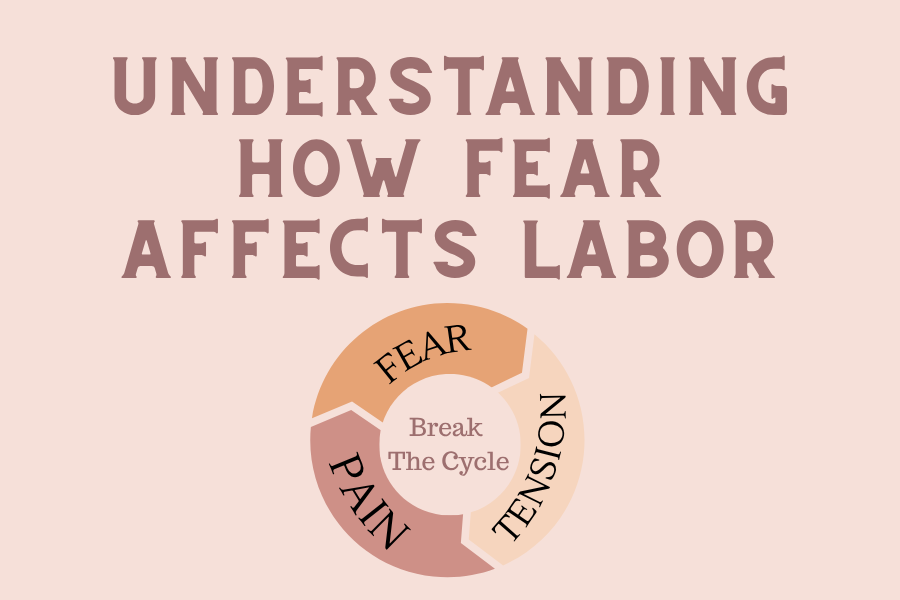
The fear-tension-pain cycle describes what can happen when fear or stress enters the labor experience:
Fear → Tension → Increased Pain → More Fear → More Tension
Let's break it down.
When you feel afraid, your brain may interpret that fear as a signal that something is wrong or that you aren't safe. Your nervous system responds by becoming more alert and preparing your body to protect you.
You may notice yourself:
Holding your breath
Clenching your jaw
Raising your shoulders
Tightening your hands
Tensing your pelvic floor
Becoming more rigid throughout your whole body
That physical tension can make contractions feel more difficult to cope with. Then, when the contraction feels more intense, you become more fearful. And the cycle continues.
Fear creates tension.
Tension can increase the intensity of the experience.
Increased intensity can create more fear.
This is a normal response from your nervous system. It does not mean you're doing anything wrong. And the good news is that the cycle can be interrupted.
So How Do We Break the Cycle?
The goal is to help your body remain as relaxed and supported as possible while it does the work of birth.
And this is where your birth toolbox comes in. Here are some of the tools you can practice before labor.
1. Breathe
Slow, intentional breathing can give your nervous system something steady to focus on during a contraction. Instead of holding your breath or bracing against the sensation, practice taking slow breaths and consciously relaxing your body.
Try:
Inhale slowly.
Exhale slowly.
Soften your jaw.
Drop your shoulders.
Practice this during pregnancy so it feels familiar when labor begins.
2. Relax Your Jaw
This may sound surprisingly simple, but tension can travel throughout the body. During a contraction, check in with yourself:
Is my jaw clenched?
If it is, let it soften. Unclench your teeth. Drop your shoulders. Relax your hands. Think about creating softness rather than bracing against the contraction.
3. Use Movement
You don't have to stay still during labor.
Swaying, rocking, walking, leaning forward, changing positions, and using your partner for support can all give your body different ways to work through contractions. Movement can also help create space in the pelvis and encourage your baby to move and adjust.
Here are our resources and classes on positions and how to use movement efficiently in labor!
4. Use Sound
Low, relaxed sounds can be incredibly helpful during contractions. Try humming, moaning, or making a low "oooooh" sound. Rather than trying to stay quiet or hold everything in, allow your voice to move with the contraction.
And remember: Relaxed jaw, relaxed mouth, relaxed sound.
5. Use Touch and Counterpressure
Supportive touch can be incredibly grounding.
Your partner or doula might use:
Hip squeezes
Counterpressure
Massage
Gentle touch
A hand to hold
Pressure on the lower back
Sometimes the most powerful thing is simply knowing:
"I'm not doing this alone."
To learn exactly how to do these comfort techniques, join our Childbirth Education course where we go through each one and show you exactly how your partner can help you feel comfortable in birth.
6. Create a Safe Environment
Think about what helps you feel safe. Maybe it's dim lighting. Maybe it's quiet. Maybe it's music. Maybe it's having your favorite people nearby. Maybe it's knowing exactly what your options are before someone asks you to make a decision.
Your birth environment can influence how your nervous system responds to labor. The goal is to create an environment where you can think:
"I am safe. I am supported. My body knows what to do."
What If I Feel Afraid During Labor?
You probably will. And that's okay. The goal isn't to have zero fear.
You might feel nervous before your next contraction. You might have a moment where you think, "I can't do this." You might become overwhelmed. That doesn't mean you've ruined your labor.
Instead, you can recognize what is happening and use your tools to help interrupt the cycle.
Notice the fear.
Take a breath.
Soften your body.
Change your position.
Use your support people.
Remind yourself that you are safe.
And then take it one contraction at a time.
This Is Why Birth Preparation Matters
Understanding the fear-tension-pain cycle is only one piece of preparing for birth. Knowing why relaxation can help is useful.
But knowing what to actually do when you're having a contraction is even more valuable. That's exactly why we created A Breezy Birth, our online childbirth education program.
Throughout the course, we go beyond simply telling you to "relax."
We teach you the practical techniques that our Breezy doulas use with families every day, including breathing, movement, positions, comfort measures, partner support, relaxation techniques, and ways to stay grounded throughout the different stages of labor.
You'll learn what to do, how to do it, and when to use it. Because childbirth education isn't about trying to guarantee a certain type of birth.
It's about walking into birth with a toolbox.
More knowledge.
More preparation.
More options.
More confidence.
Ready to start preparing?
Start with our FREE A Breezy Birth Mini Course to get an introduction to the tools and education we use to help families feel more prepared. Then, when you're ready to dive deeper, explore the full A Breezy Birth experience.
We are here to help you have A Breezy Birth. Gain all the tools and skills you need. We can’t wait to see you in the course!
