How to Know Where Your Baby Is in the Pelvis During Labor
As labor progresses, your baby gradually moves down through the pelvis on their way to being born. This movement is often described using something called baby’s station.
Understanding baby’s station can help you better interpret what your body is feeling during labor. It can also explain why certain birthing positions become more helpful at different stages of labor.
While your medical provider may assess baby’s station during cervical exams, your body often gives you clues about where your baby is as well.
Let’s walk through what those clues can look like.
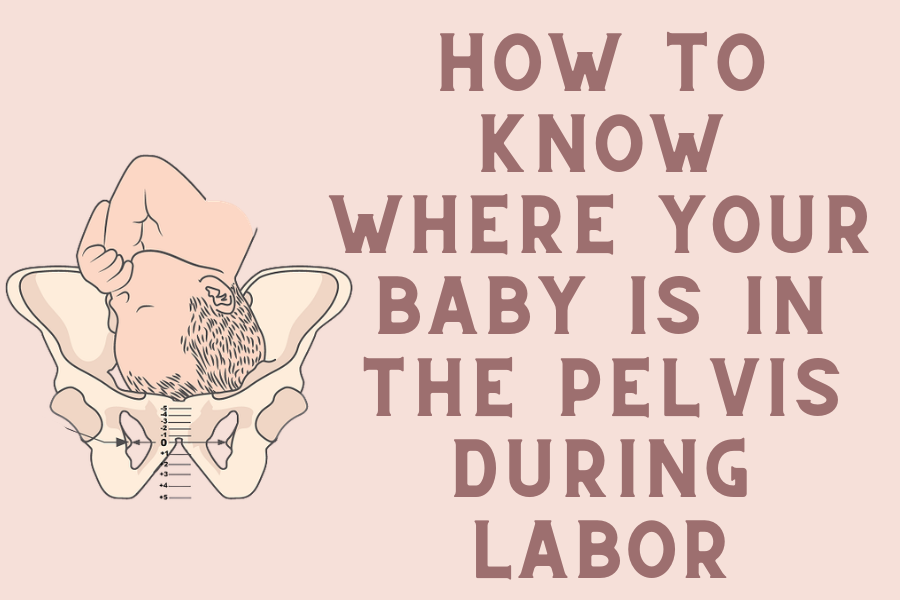
What Is Baby’s Station?
Baby’s station describes how high or low the baby is in the pelvis during labor.
It is measured on a scale that usually ranges from -5 to +5, though many providers focus most on the range from -3 to +3.
Negative numbers (- stations) mean baby is still relatively high in the pelvis
0 station means baby is roughly at the midpoint of the pelvis
Positive numbers (+ stations) mean baby is lower and getting closer to birth
As labor progresses, the baby gradually moves from higher stations to lower stations.
When Baby Is High: Negative Stations
When baby is still high in the pelvis (negative stations), many birthing people notice something interesting about their contractions, or surges.
They usually feel tightening but very little pressure.
At this stage:
Surges may feel strong in the abdomen or back
There is often no rectal or pelvic pressure
The urge to push is typically absent
This stage is often about helping baby move deeper into the pelvis. Movement, upright positions, and techniques that open the pelvis can help encourage this descent.
When Baby Is Mid-Pelvis: -1, 0, or +1 Station
As baby moves further down into the pelvis, sensations usually begin to change.
Many people start noticing pressure during contractions but not between them.
You might notice:
Pressure building during surges
Relief between contractions
Increasing pelvic heaviness as labor progresses
This stage often signals that baby is engaging deeper into the pelvis and navigating the curves of the birth canal.
Position changes can be especially helpful here, as different movements and positions slightly change the shape of the pelvis and can help baby rotate or descend more efficiently.
When Baby Is Low: Positive Stations
When baby moves lower into the pelvis (positive stations), pressure becomes much more noticeable.
At this stage, many people feel:
Pressure during contractions
Pressure between contractions
A growing urge to bear down or push
This typically happens when baby reaches +2 station or lower, meaning they are very close to being born.
Why Waiting to Push Can Help
It can be tempting to start pushing as soon as you feel pressure, but in many cases, it can be helpful to wait until baby has descended further.
Many care teams recommend beginning active pushing when baby is around +2 station or lower. Waiting until this point can help conserve energy and allow the uterus to continue doing much of the work of bringing baby down.
Resting while your body continues moving baby downward is often called laboring down.
Laboring down can:
Reduce exhaustion from long pushing phases
Allow baby to descend naturally
Make pushing more effective when it begins
Of course, every birth is different and care providers will guide you based on your specific situation.
Why Position Changes Matter During Labor
One of the reasons doulas and birth professionals encourage movement and position changes during labor is because different positions slightly change the dimensions of the pelvis.
The pelvis is not a fixed, rigid structure. The joints and ligaments allow it to open in different ways depending on how the body is positioned.
For example:
Some positions help baby engage when they are still high
Others help baby rotate through the middle of the pelvis
And some positions help create more space for baby to descend and be born
Using positions intentionally during labor can help support this natural process and make descent more efficient.
Want to Learn Which Positions Help Most?
Now that you understand how baby moves through the pelvis, the next step is learning which positions can help at different stages of labor.
Learn more about how different positions support your body and baby during labor by reading this blog:
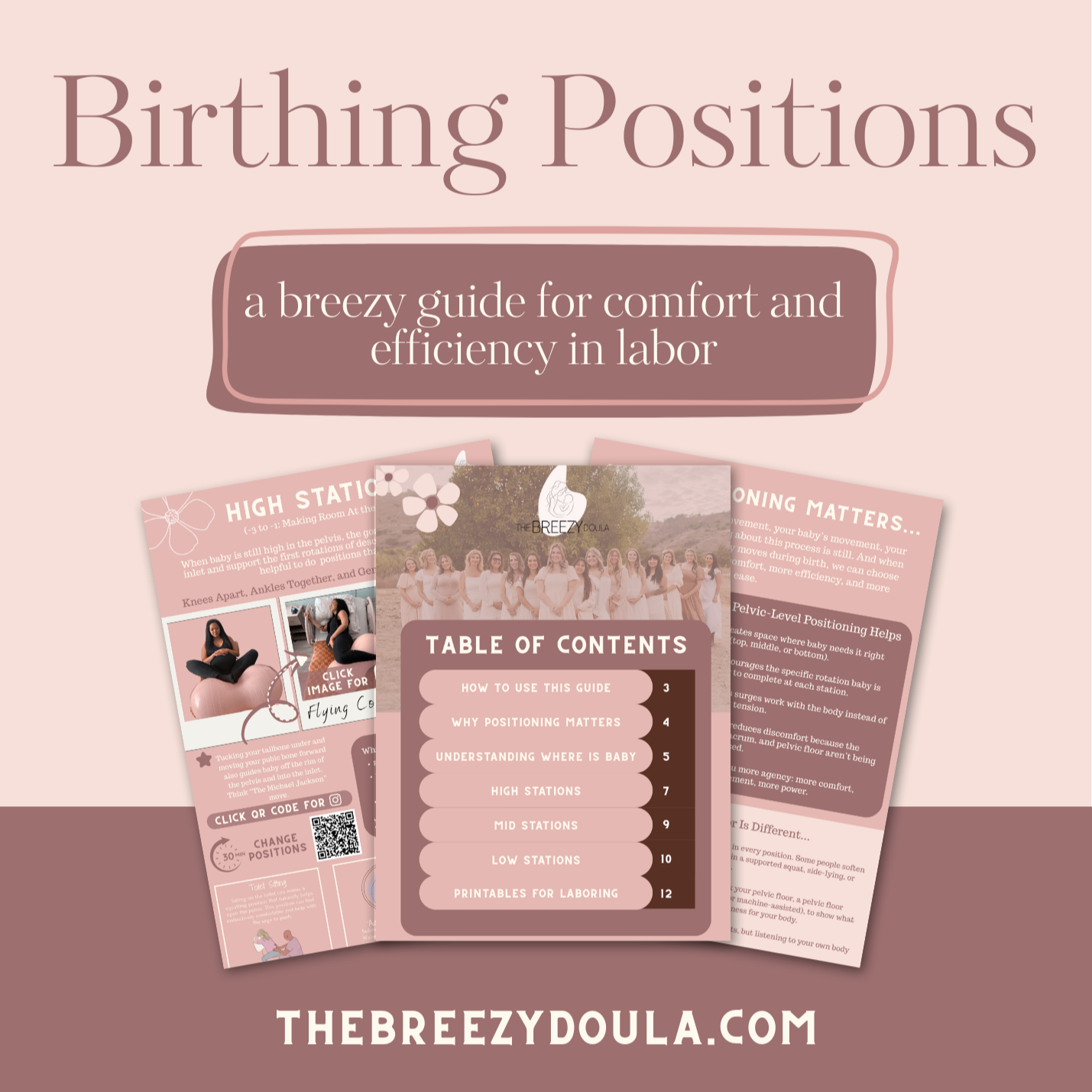
A breezy guide for comfort and efficiency in labor. This is the most comprehensive guide on what positions to use and when to use them. Our guide also INCLUDES an easy reference printable for your labor folder. Get a better understanding as to why these positions work and how to get the comfort you deserve in birth!