How to Use the BRAINS Tool in Birth: Making Informed, Confident Decisions During Labor
Pregnancy and birth come with many decisions. Some are expected and discussed ahead of time, while others arise unexpectedly in the middle of labor, when emotions are high and time can feel limited. This is where having a simple, trusted framework can make all the difference.
The BRAINS tool is a powerful decision-making framework used in birth to help families understand their options, feel confident in their choices, and stay centered in moments that might otherwise feel overwhelming. With our Breezy Doulas, this tool has supported countless families and doulas in the birth room by creating space for clarity, consent, and confidence.
What Is the BRAINS Tool?
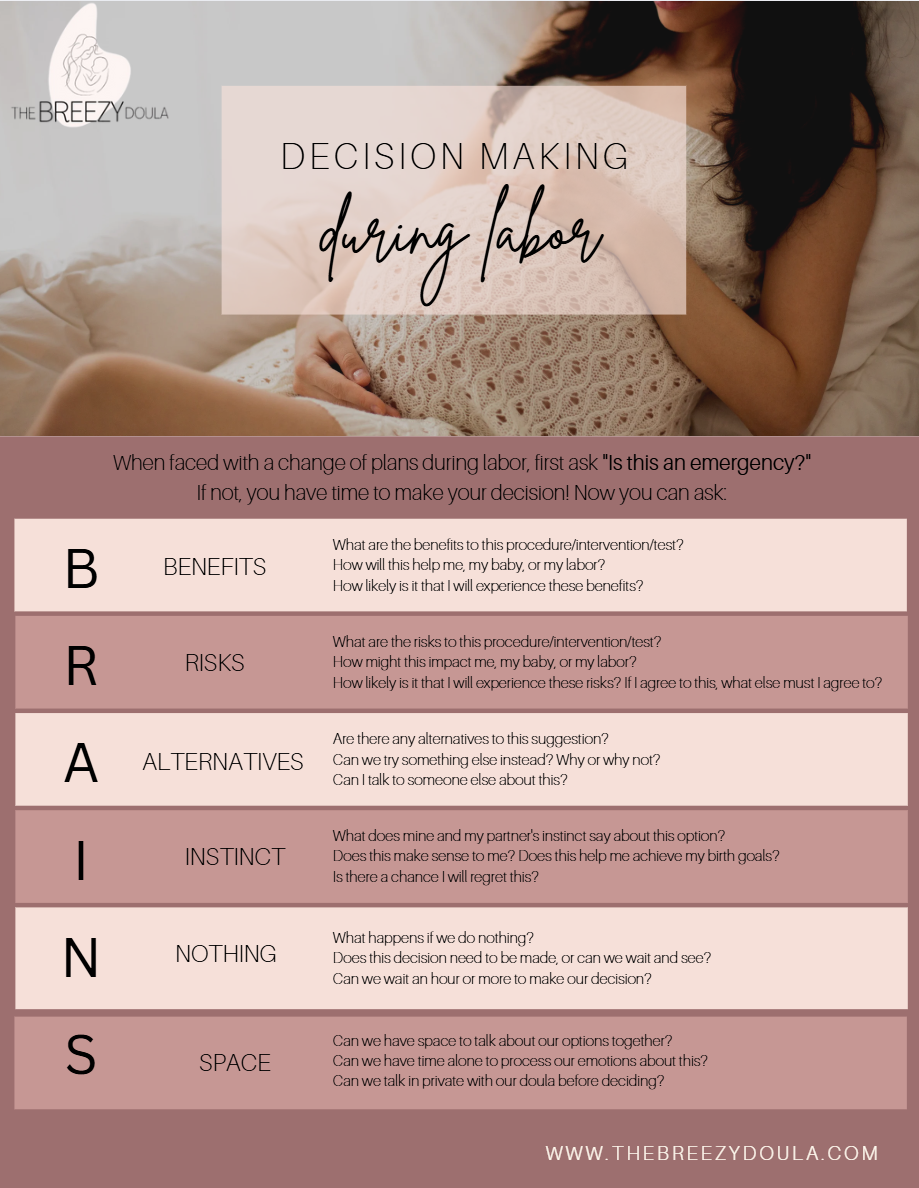
BRAINS is an acronym that stands for:
B – Benefits
R – Risks
A – Alternatives
I – Instinct (or Intuition)
N – Nothing
S – Space
Each letter represents a key question that helps families gather information, reflect on their values, and make decisions that feel right for them and their baby.
Importantly, BRAINS is not about saying yes or no to interventions. It is about informed consent, understanding your options, and feeling respected in your care.
Why Decision-Making Tools Matter in Birth
Birth can be unpredictable. Even with thorough preparation, situations may arise where a provider recommends an intervention or change to the original plan. In those moments, families often feel rushed, scared, or unsure how to respond.
Using a tool like BRAINS helps:
Slow the moment down
Shift from fear to understanding
Center the birthing person and family in the decision
Encourage respectful, collaborative conversations with providers
We have seen time and time again how this framework transforms stressful moments into empowering ones.
Breaking Down the BRAINS Framework
B – Benefits
Ask: What are the benefits of this recommendation?
Understanding the potential benefits helps families see the intention behind a suggestion. This might include improved safety, comfort, or labor progress.
Example question:
“What are the benefits you’re hoping this will provide for me or my baby?”
R – Risks
Ask: What are the risks or downsides?
Every intervention and choice has potential risks, including choosing to do nothing. Knowing the risks allows families to weigh whether the benefits outweigh them for their unique situation.
Example question:
“What are the possible risks or side effects?”
A – Alternatives
Ask: Are there other options?
Often there are multiple ways to approach a situation. Alternatives may include different interventions, comfort measures, or waiting to see how labor progresses.
Example question:
“Are there any alternatives we could try first?”
I – Instinct
Ask: What does my intuition say?
Birth is not only a physical process, it is deeply emotional and instinctual. This step encourages the birthing person to check in with their body, values, and inner voice.
We remind families that intuition is a valid and important part of decision-making.
N – Nothing
Ask: What happens if we do nothing right now?
This question helps clarify urgency. Sometimes immediate action is necessary. Other times, waiting and observing is a safe and reasonable option.
Example question:
“What would happen if we waited or did nothing for a bit?”
S – Space
Ask: Can we have space or time to decide?
Space may look like a few minutes alone, dimmed lights, or time to talk privately with a partner or doula. This step is especially important when emotions are high.
Example request:
“Can we have a few minutes to talk this over together?”
How BRAINS Supports Consent and Comfort in Birth
Using BRAINS creates a shared language between families, doulas, and providers. It reinforces that decisions are collaborative and that the birthing person’s comfort and understanding matter.
In the birth room, we have seen BRAINS:
Reduce fear and anxiety
Improve communication with care providers
Help partners feel more involved and confident
Prevent regret by ensuring families feel informed and heard
Even when outcomes are not what families originally envisioned, knowing that decisions were made thoughtfully and consensually can be incredibly healing.
How Doulas Support Families Using BRAINS
One of the key roles of a doula is to help families navigate decision-making without pressure or judgment. Doulas do not give medical advice, but they do help:
Remind families of the BRAINS framework
Encourage questions and understanding
Create calm and grounded space during discussions
Support families emotionally, regardless of the decision made
Many families tell us that having a doula present made them feel more confident speaking up and asking for clarity when it mattered most.
Practicing BRAINS Before Labor
Like any tool, BRAINS becomes more effective with practice. We encourage families to:
Review the BRAINS framework during pregnancy
Practice using it in everyday decisions
Discuss it with their partner and care provider
Include it in their birth preferences or labor notes
Childbirth education classes and prenatal discussions with your doula are great opportunities to practice this skill before labor begins.
A Tool for Birth and Beyond
While BRAINS is often taught in the context of labor and birth, many families continue to use it postpartum and beyond. From newborn care decisions to parenting choices, this framework supports thoughtful, values-based decision-making throughout parenthood.
At Breezy, we believe that informed choice is a cornerstone of respectful, empowering birth. The BRAINS tool is one of the simplest and most effective ways to protect that experience.