What to Pack in Your Hospital Bag for Labor and Birth
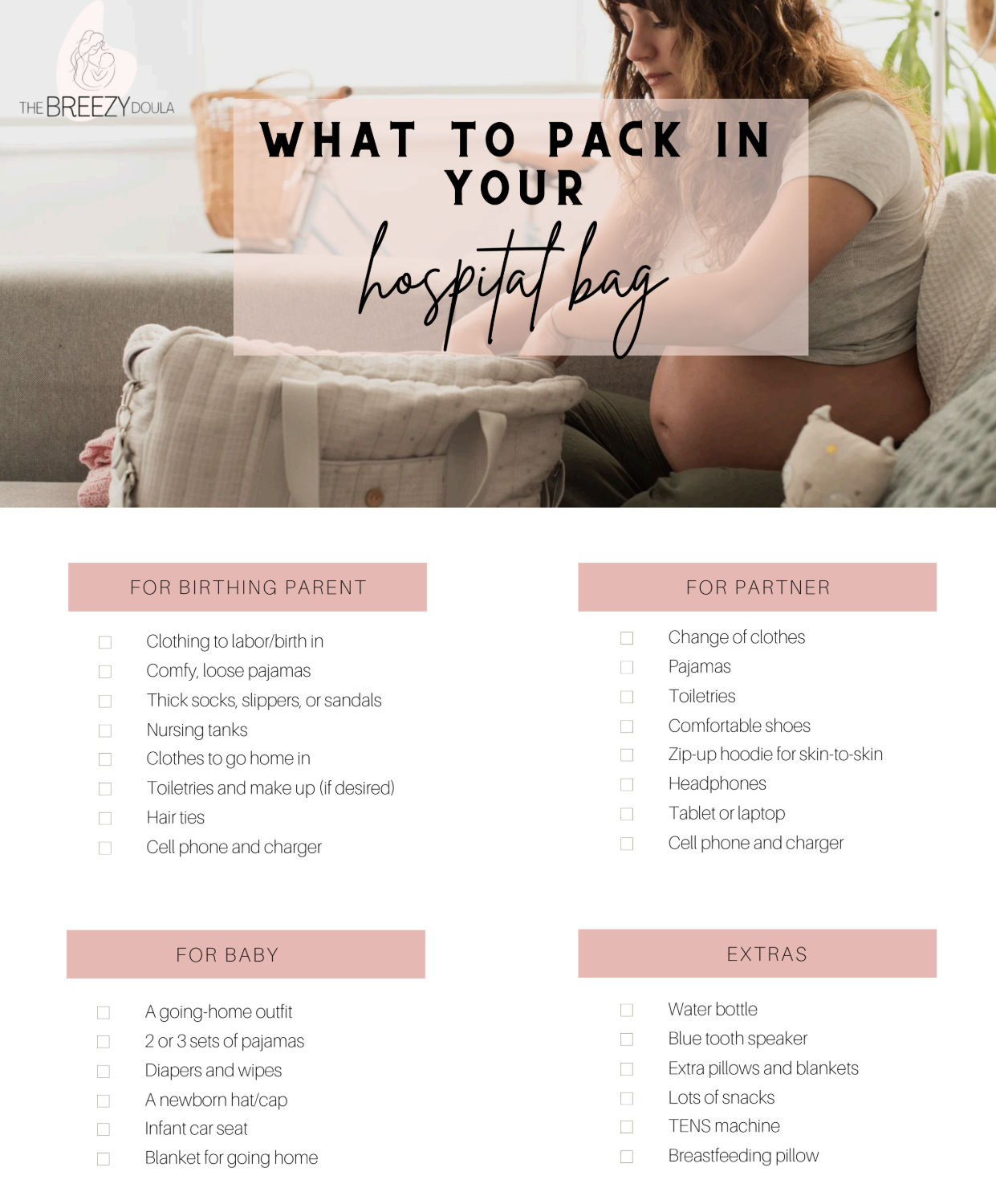
Packing your hospital bag can feel exciting and overwhelming, or somewhere in between. You want to feel prepared without overpacking, comfortable without bringing your entire house, and confident that you will have what you truly need when labor begins. The good news is that you do not need much to birth your baby. A thoughtfully packed hospital bag can help you feel prepared as you head into labor and recovery. This guide walks you through what to pack for labor, postpartum recovery, your partner, and your baby, plus what you can safely leave at home!
When Should You Pack Your Hospital Bag?
Most families choose to have their hospital bag ready between 32 and 36 weeks of pregnancy. Even if you are not expecting an early birth, having your bag packed ahead of time offers peace of mind and removes one more decision from your mental load as your due date approaches. Something to also keep in mind is to have a conversation with your birth doula about what is in their birth bag so you are not double packing.
Essentials to Pack for Labor
During labor, comfort and familiarity matter. These items help support your body, mind, and emotional well being.
Photo ID and insurance card~ make sure to let your partner have this on hand so they can handle the check in process while you’re laboring
Copies of your birth plan, if you have one (2 copies minimum)
Phone and extra long charging cord or an extension cord
Your favorite lip balm
Hair ties or headband
Comfortable slippers
Refillable water bottle
Snacks
Glasses or contacts if needed
Optional comfort items can make your labor space feel more personal and calming. Consider packing a birth comb, spiky massage balls, essential oils if permitted by your hospital, a small speaker for music, or affirmation cards or photos that help you stay focused and grounded.
What to Pack for Postpartum Recovery
After birth, your body deserves softness, warmth, and ease. While hospitals provide many postpartum essentials, having familiar items can help you feel more comfortable during recovery.
Comfortable robe or loose pajamas
Nursing bra or supportive bralette (Something that can have the straps removed easily so skin to skin is easily accessible)
Going home outfit that feels gentle and non restrictive
Toiletries such as toothbrush, face wash, shampoo, and moisturizer
Shower sandals
Some parents also enjoy bringing a small self care item such as cozy socks, a favorite face mist, or a journal to mark the beginning of this new chapter.
What to Pack for Your Partner or Support Person
Your partner or support person will likely be with you for long hours, and their comfort matters too. When they are well supported, they are better able to support you.
Comfortable clothes (Bringing a zip up jacket is helpful for skin to skin with baby~ it can get cold in the hospital and this allows for skin to skin and being cozy)
Toiletries
Phone charger
Snacks
Refillable water bottle
Pillow or blanket if space allows
Encourage your support person to pack ahead of time so they can stay present and focused on you and your baby. Using suitcases makes it easy to transport rather than a bunch of bags- trust us.
What to Pack for Your Baby
Hospitals provide most essentials for newborns, so you only need a few meaningful or personal items.
Going home outfit
1 Swaddle or blanket
1 Baby hat or bow
Infant car seat properly installed before birth
Haaka with colostrum if you are harvesting~ great to substitute as an option before formula if needed
Diapers, wipes, and formula are typically provided by the hospital unless you prefer specific brands. (Bring home as much as you’re able to- diapers get used quick)
What Not to Pack in Your Hospital Bag
It is common to feel pressure to pack everything “just in case,” but overpacking can actually add stress and clutter to your hospital room. Most hospitals are well stocked, and additional items can usually be brought later if needed.
You can usually leave these items at home:
Breast pump, unless medically indicated or recommended by your provider
Large amounts of baby clothing
Excessive toiletries or makeup
Diapers, wipes, pads, and mesh underwear provided by the hospital
Bulky pillows or blankets unless you know you sleep best with them, you can always ask for more pillows and blankets at the hospitals
Keeping your bag simple allows you to focus on labor, recovery, and bonding rather than managing belongings.
A Final Thought on Packing Your Hospital Bag
Your hospital bag is not about being perfectly prepared. It is about supporting your comfort and sense of safety during one of the most transformative moments of your life. Trust that your body knows how to birth and that your care team and support system are there to support you.
If you want help preparing emotionally and physically for labor beyond packing your bag, childbirth education and doula support can make a meaningful difference in how supported and empowered you feel on birth day.