

Side-Lying Release: A Simple Technique That Can Make Labor More Comfortable
If you've taken one of our Spinning Babies® Parent Classes, you've probably heard us talk about the importance of balance before birth.
One of our favorite techniques is the Side-Lying Release. Although it looks simple, this movement can help create more balance in the muscles and ligaments surrounding the pelvis, giving baby the space they need to rotate and descend more efficiently.
As birth doulas, this is one of the techniques we use frequently during labor. Whether baby is slow to descend, labor has become more intense in one area, or contractions seem productive but progress has slowed, the Side-Lying Release is often one of the first movements we recommend.
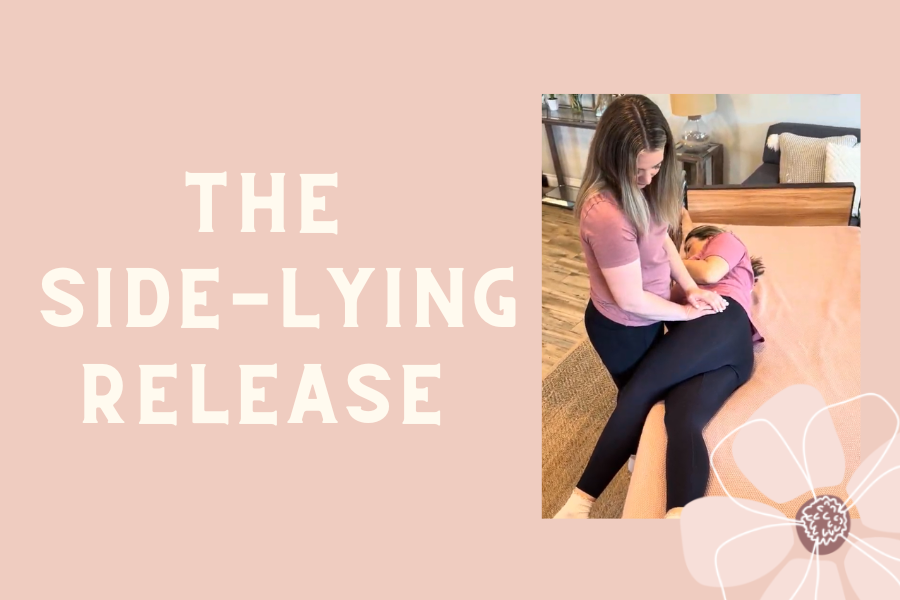
What Is the Side-Lying Release?
The Side-Lying Release is a gentle movement developed by Spinning Babies® that uses gravity to lengthen the muscles, fascia, and ligaments around one side of the pelvis.
Pregnancy naturally places uneven demands on the body. Sitting for long periods, carrying toddlers on one hip, crossing your legs, previous injuries, or simply daily life can all contribute to small imbalances in the pelvis. These imbalances can make it harder for baby to find an ideal position. The Side-Lying Release helps restore balance so baby has the best opportunity to engage and rotate during labor.
Benefits During Pregnancy
Many families enjoy using the Side-Lying Release during the third trimester because it may help:
Encourage baby into an optimal position before labor.
Improve pelvic balance.
Reduce feelings of pelvic tightness.
Relieve lower back discomfort.
Create more room for baby to settle head down.
Think of it less as "turning the baby" and more as creating an environment where baby can choose the best position.
Benefits During Labor
During labor, the Side-Lying Release becomes even more valuable.
Our doulas often suggest it when:
Labor seems to have slowed.
Contractions are strong but baby is not descending.
Back labor is becoming uncomfortable.
Baby may be entering the pelvis slightly crooked (asynclitic). You can see coupling of contractions when this happens.
One side of labor feels significantly more intense than the other.
By creating temporary length through one side of the pelvis, this technique may help baby rotate into a more efficient position.
Many parents notice contractions become more effective afterward.
When Should You Use It?
During Pregnancy
The Side-Lying Release is commonly introduced during the third trimester as part of a daily balancing routine. It pairs well with other Spinning Babies® Daily Essentials like the Forward-Leaning Inversion and pelvic balancing activities.
During Labor
During labor, this movement can be used whenever labor appears to benefit from additional pelvic balance.
Many doulas will perform it:
During early labor if baby seems high.
During active labor if progress slows.
During back labor.
Before trying other positional techniques.
How Often Should You Do It?
During Pregnancy
One Side-Lying Release on each side once daily is often enough as part of a balancing routine.
If you're specifically working with a breech or posterior baby under the guidance of your provider or a Spinning Babies® trained educator, you may be encouraged to perform it more frequently as part of a complete balancing program.
During Labor
There is no fixed schedule.
Instead, your doula or provider may recommend using it based on how labor is unfolding. Sometimes one round is enough. Other times it may be repeated later if needed.
Step-by-Step Instructions
Because this movement relies on positioning, having a support person nearby is helpful.
Step 1
Lie on your side near the edge of a firm bed or massage table. Your shoulders and hips should stay stacked.
Step 2
Keep your bottom leg straight. Bring your top knee forward and bend it to approximately 90 degrees.
Step 3
Allow your lower leg to slowly hang toward the floor while your support person helps stabilize your upper body and shoulder. The goal is a gentle stretch through the side of the pelvis, not discomfort.
Step 4
Relax into the position for approximately 2 to 3 minutes while breathing slowly.
Step 5
Return to the bed carefully and repeat on the opposite side. Gentle movement afterward, such as walking, often helps baby respond to the newly balanced pelvis.
Extra Tips for Success
A few things can make this movement even more effective:
Stay relaxed and avoid forcing the stretch.
Use slow, deep breathing. With each exhale, let your leg drop even further.
Perform both sides even if one feels tighter.
Walk for a few minutes afterward if you're comfortable.
Combine it with other balancing activities instead of relying on a single technique.
Remember, no single exercise "turns" a baby. The goal is always balance, creating space, and allowing your baby to find their own best position.
How Our Birth Doulas Use the Side-Lying Release
At The Breezy Doula, the Side-Lying Release is one of many positioning techniques we use throughout labor.
Every labor unfolds differently. Sometimes a simple position change is all that's needed. Other times we combine the Side-Lying Release with movement, upright positions, rebozo techniques, peanut ball positioning, or other Spinning Babies® strategies to help labor continue efficiently.
Our goal is never to force labor. It's to work with your body, your baby, and your labor pattern to create the best possible environment for progress while helping you stay comfortable and confident throughout the process.
Want to Learn More?
The Side-Lying Release is just one of many techniques we teach in our Spinning Babies® Parent Class.
In class, you'll learn:
Daily Activities that help create balance throughout pregnancy.
The Three Balances and why they matter.
Birth positions that create more room in different parts of the pelvis.
Comfort measures your partner can use during labor.
Practical techniques that help labor become more efficient while keeping you comfortable.
Understanding why these movements work gives you the confidence to use them intentionally throughout pregnancy and birth. Whether you're preparing for your first baby or adding new tools to your birth experience, these techniques can help you work with your body instead of against it.
