What To Know About Birthing Positions: Comfort and Working With Your Body
When we think about labor, many of us picture birth happening in one position, on the back, legs supported, waiting for the baby to arrive. While that image is common, it doesn’t reflect how birth often works best for most bodies. Birthing positions play a powerful role in comfort, empowerment, contraction efficiency, and how baby moves through the pelvis.
Why Positioning Matters in Labor
Your pelvis is not a fixed structure. It’s designed to move. The joints and ligaments of the pelvis shift depending on how you’re positioned, creating subtle but meaningful changes in space. These shifts can influence how labor feels and how efficiently it progresses.
This is where both Spinning Babies® principles have helped so many women get the birth that they dreamed of: movement and positioning are tools, not rigid rules.
Here are our top 3 positions for labor
As labor progresses, your baby moves through different levels, or stations, within the pelvis. Each stage benefits from specific types of movement that support pelvic mobility, encourage baby’s descent, and help contractions work more efficiently.
Here are three of our favorite positions, matched to where baby is in the pelvis
High Station: Froggy Walchers
Best used when baby is still high in the pelvis
Froggy Walchers is a powerful position designed to help create space at the pelvic inlet, where baby first enters the pelvis. In this position, the birthing person lies back while the legs are supported and allowed to fall open and downward, often with feet supported by a partner, chair, or birth ball.
Why this position helps:
Encourages opening at the top of the pelvis
Uses gravity and ligament stretch to create space
Helps baby engage more deeply with contractions
Froggy Walchers embodies pelvic mobility by allowing the ligaments and joints to soften and lengthen, which can make contractions feel more productive rather than just intense.
Mid Station: Fire Hydrant
Best used when baby is navigating the mid-pelvis
The fire hydrant position (on hands and knees with one leg lifted out to the side) is excellent when baby is rotating or moving through the middle of the pelvis—a common place for labor to slow or feel “stuck.”
Why this position helps:
Creates asymmetry in the pelvis, encouraging rotation
Supports side-to-side pelvic movement
Helps contractions guide baby through turns in the pelvis
This position highlights how intentional movement can help contractions do their job more efficiently by changing pelvic shape and encouraging baby’s alignment—without force or strain.
A Breezy Birth Favorite for low stations: All Fours
One of our favorite labor positions at Breezy is hands-and-knees (all fours), and for good reason.
This position:
Allows maximum sacral movement
Reduces pressure on the lower back
Encourages fetal rotation
Supports an empowering, grounded posture
All fours also offers incredible flexibility. The birthing person can adjust:
Knee width and positioning
Hip movement and pelvic tilt
Ankle and foot placement
Transitions into lunges or side-lying as needed
This position helps the birthing person stay active and responsive during labor, working in partnership with their body. This position also helps birthing companions assist in sensation management such as doing counter pressure or hip squeezes. We know as doulas, having partners connect with the birthing person in this space helps relaxes the environment and body; which helps progress the laboring process- all good things!
Want to Know What Positions to Use—and When?
If you are looking to understand more about birthing positions, check out our Birthing Positions Guide.
A Breezy Guide for Comfort and Efficiency in Labor is our most comprehensive resource on how positioning supports labor progress and comfort.
Inside, you’ll find:
How to use this guide during labor
Why positioning matters
Understanding where baby is in the pelvis
Supportive positions for high, mid, and low stations
An easy-reference printable for your labor folder
This guide helps break down what positions to try, when to use them, and why they work, along with alternative comfort measures to support efficiency and rest.
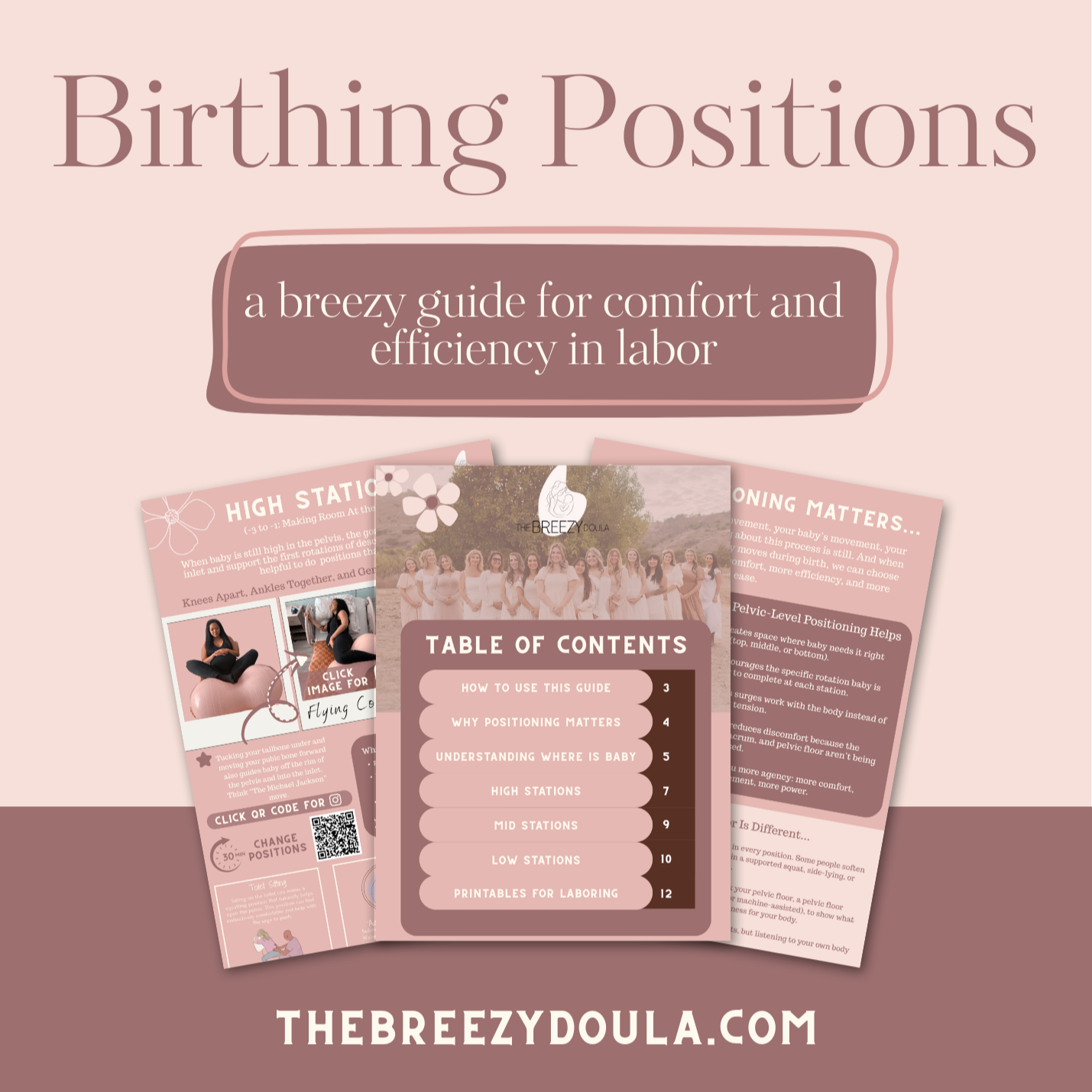
A breezy guide for comfort and efficiency in labor. This is the most comprehensive guide on what positions to use and when to use them. Our guide also INCLUDES an easy reference printable for your labor folder. Get a better understanding as to why these positions work and how to get the comfort you deserve in birth!
Spinning Babies®: A Supportive Approach
Spinning Babies focuses on balance, gravity, and movement to help babies navigate the pelvis more easily. Importantly, this approach is not about forcing baby into a specific position or implying that labor challenges are the birthing person’s fault.
Instead, these movements offer:
Gentle ways to support comfort
Opportunities to encourage fetal rotation
Tools to work with the body rather than against it
Not every labor outcome can be changed with positioning alone, but thoughtful movement can still be a meaningful part of a supportive birth experience. In this class you learn how to embody balance, gravity and movement during pregnancy and labor through daily exercises and understanding birthing anatomy.
Join one of our classes to learn
What is Spinning Babies®?
Birth Anatomy
Comfort in pregnancy
Prepare for birth
Make space for baby
The BEST birth positions for your body/baby in labor
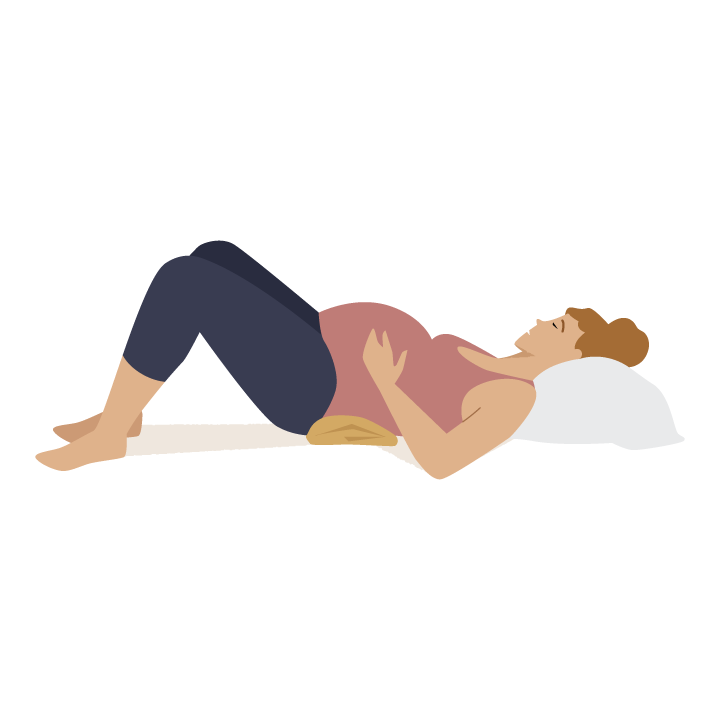
Birthing on Your Back: Making It More Supportive
While upright and forward-leaning positions are often encouraged, some people prefer—or medically need—to birth on their back. If that’s the case, there are ways to make this position more body-friendly.
One important consideration is sacral mobility.
The sacrum needs space to move backward as baby descends. Lying flat against a firm surface can limit this movement, which may increase discomfort or slow descent.
A simple adjustment can help:
Roll a towel or small blanket and place it in a horseshoe shape around the sacrum, leaving the center free
Or place the rolled towel horizontally just above the crease between the buttocks
These small modifications allow the sacrum more freedom to move while still offering support.
A breezy guide for comfort and efficiency in labor. This is the most comprehensive guide on what positions to use and when to use them. Our guide also INCLUDES an easy reference printable for your labor folder. Get a better understanding as to why these positions work and how to get the comfort you deserve in birth!
Our goal is simple: to help you feel informed, supported, and confident—so you can move through labor with comfort, flexibility, and choice. We know that this journey can be overwhelming and scary at times, so reach out to us if you have any questions along the way.. We are here to support you!