How To Prepare For Labor When You’re Afraid Of The Pain
If you’re feeling afraid of labor pain, you are not alone. Fear of pain is one of the most common concerns we hear from expecting parents, even those who feel confident in many other areas of pregnancy. Labor is unfamiliar, intense, and deeply physical, and our culture often reinforces the idea that birth is something to endure rather than experience. The truth is, labor sensations are not just about what your body is doing. They are also shaped by how supported, informed, and safe you feel. Understanding what actually causes labor pain and learning how to work with your body, rather than against it, can dramatically change how labor feels.
This is not about promising a pain-free birth. It is about helping you feel more in control and more grounded as labor unfolds.
What Actually Causes Labor Pain
Labor sensations come from the uterus contracting, the cervix opening, and the baby moving through the pelvis. These sensations are strong and intense, but they are also purposeful. Your body is working in coordination to bring your baby into the world.
What often makes labor feel overwhelming is not the contractions themselves, but the tension layered on top of them. When the body is tense, muscles tighten, blood flow decreases, and sensations feel sharper and more difficult to cope with.
This is where understanding the fear–tension–pain cycle becomes essential.
The Fear–Tension–Pain Cycle
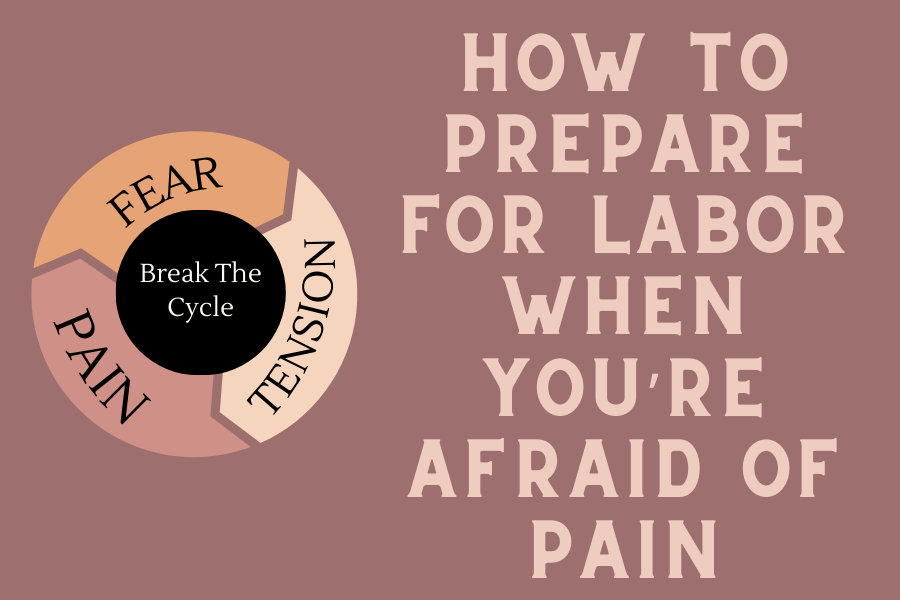
The fear–tension–pain cycle explains how fear can amplify discomfort during labor.
It works like this: fear triggers tension in the body. That tension makes contractions feel more painful. Increased pain then reinforces fear, creating a cycle that builds on itself.
When the body is afraid, it releases stress hormones like adrenaline. These hormones can interfere with the natural flow of labor, reduce oxygen to the muscles, and make sensations feel more intense and less manageable.
Breaking this cycle does not mean forcing yourself to “stay calm.” It means learning tools that help your body feel safe enough to relax, even while doing hard work. This is a major focus of birth education and HypnoBirthing® classes.
When fear decreases, tension softens. When tension softens, sensations often become more productive and easier to work with.
How to Prepare During Pregnancy
Simple, consistent practices can make a meaningful difference. Daily affirmations help reframe birth as something your body knows how to do.
Visualizing your labor and birth allows your mind to rehearse calm, confident responses to contractions.
Having open conversations with your doula gives you space to voice fears, ask questions, and feel supported long before labor begins.
Gentle daily Spinning Babies activities encourage balance, comfort, and optimal positioning while also helping you feel more connected to your body.
Other helpful tools include practicing slow, intentional breathing, journaling about fears and expectations, listening to calming music, and learning comfort techniques ahead of time so they feel familiar and grounding when labor begins.
Comfort Measures You Can Use to help with any discomfort in labor
There is no single right way to cope with labor sensations. Different tools work at different times, and many parents find that layering comfort measures is most effective. Below are physical and sensory tools that can help you feel more grounded and supported during labor.
Physical Tools for Sensation Management
A birth comb is a small, simple tool that fits in the palm of your hand. Squeezing the comb during contractions provides focused pressure that can help distract the brain from uterine sensations. This works through the gate control theory of pain, where competing sensations reduce how pain is perceived.
Spiky balls or massage balls can be used on the lower back, hips, shoulders, or hands. Rolling or pressing these balls during contractions offers counterpressure and sensory input that many parents find soothing and grounding.
A TENS unit delivers gentle electrical pulses through pads placed on the lower back. These pulses interfere with pain signals traveling to the brain and can significantly reduce discomfort, especially during early and active labor.
Movement and Positioning
Movement is one of the most powerful tools for labor comfort. Walking, swaying, slow dancing with a partner, rocking on a birth ball, or changing positions regularly helps the pelvis stay mobile and supports baby’s movement through the birth canal.
Upright and forward-leaning positions often reduce back pressure and allow gravity to assist labor. Even small movements, like slow hip circles or leaning over a counter, can make a noticeable difference.
Movement is not about staying busy. It is about listening to your body and responding intuitively to what feels supportive in the moment.
Touch and Partner Support
Supportive touch can calm the nervous system and increase oxytocin, the hormone that supports labor progress. This might look like steady counterpressure on the lower back, hip squeezes, gentle massage, or simply holding hands and breathing together.
Partners often want to help but are unsure how. Learning specific touch techniques ahead of time gives partners confidence and helps them feel actively involved rather than helpless.
Music, Sound, and the Environment
Music can be a powerful regulator of the nervous system. Familiar songs, calming playlists, or meaningful music from important moments in your life can help create a sense of safety and focus.
Sound matters too. Low tones, humming, moaning, or slow vocalization during contractions can help release tension in the jaw and pelvic floor. A relaxed jaw often signals a relaxed pelvic floor.
Creating a calming environment with dim lighting, fewer interruptions, and familiar sensory cues can significantly reduce fear and help your body stay in a labor-supportive state.
How Birth Education Changes the Experience
Birth education does more than teach techniques. It helps you understand what is happening in your body and why, which reduces fear of the unknown.
In HypnoBirthing classes, parents learn how the mind and body work together during labor. Techniques like breathing, visualization, relaxation, and mental rehearsal help retrain the body’s response to contractions so they feel more manageable and purposeful.
In our Spinning Babies education, our families focus on movement, balance, and positioning to support comfort and efficiency in labor. Understanding how baby moves through the pelvis helps parents feel empowered to use movement intentionally instead of waiting passively. This class also goes over daily activities that help promote balance within the body during pregnancy so that your baby has the best chance to move into spaces that promote efficient uterine surges.
When you know what sensations are normal and how to respond to them, labor feels less like something happening to you and more like something you are actively participating in.
How a Doula Can Support Labor Pain
A doula provides continuous emotional, physical, and informational support throughout labor. This continuity is key. Unlike hospital staff who may change shifts, a doula stays with you and helps maintain a calm, grounded environment.
Doulas help guide movement, suggest comfort measures, offer reassurance, and support both the birthing person and their partner. They help partners feel confident and involved, rather than unsure of what to do.
Research consistently shows that continuous labor support is associated with lower intervention rates, shorter labors, and more positive birth experiences. Just as importantly, many parents report feeling more supported and empowered during their birth.
We have helped so many families through the ups and downs of the journey. Our doula team is here to guide you, so it’s not as scary.
Preparing for Labor Is About More Than Pain
Preparing for labor when you’re afraid of pain is not about eliminating sensation. It is about building trust in your body, learning tools that support comfort, and surrounding yourself with people who help you feel safe.
Fear thrives in uncertainty. Education, preparation, and support replace fear with understanding and confidence.
You deserve to enter labor feeling informed, supported, and capable. With the right tools and care team, labor can become something you move through with strength and intention, not something you simply endure.