What Is a Bishop Score And Why Does It Matter Before Induction?
It’s such a common experience to have providers start talking about induction towards the end of your pregnancy…
Sometimes it is medically indicated. Sometimes it is elective. Sometimes it is presented as routine.
But before you agree to an induction, there is one very important question to ask:
“What is my Bishop score?”
This is something our birth doulas at Breezy ask about all the time when families are navigating the induction decision. Because your Bishop score gives important information about how ready your body actually is for labor.
Let’s break down what it is, what it measures, and why it matters.
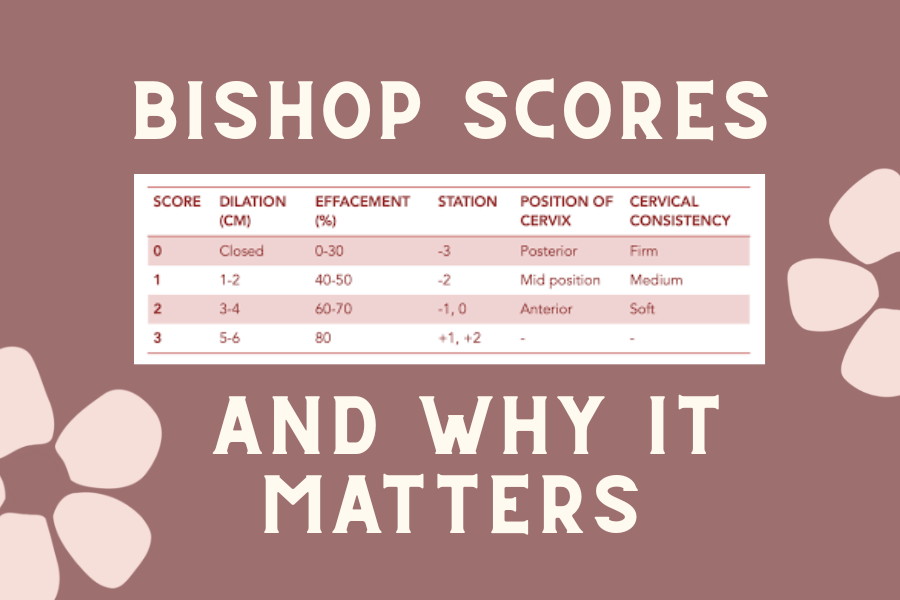
What Is a Bishop Score?
The Bishop score is a system providers use to determine how “ripe” or ready your cervix is for labor.
It is based on a vaginal exam and looks at five specific measurements of cervical readiness.
The goal of the Bishop score is to help determine whether:
Your body is already favorable for induction
Cervical ripening methods are needed before induction
Or waiting may make more sense
It is not perfect, but it is one of the main tools used when discussing induction.
The 5 Things the Bishop Score Measures
1. Cervical Dilation
This measures how open the cervix is in centimeters.
Closed means 0 cm.
Active labor is typically around 6 cm and beyond.
Dilation alone does not mean labor is imminent, but it is one piece of the puzzle.
2. Cervical Effacement
Effacement measures how thin the cervix has become.
0 percent effaced means the cervix is still thick, like a bottleneck.
100 percent effaced means it is paper thin and ready to stretch open for birth.
As labor approaches, the cervix shortens and thins out.
3. Fetal Station
Station measures how far the baby’s head has descended into the pelvis.
Negative numbers mean the baby is still higher in the pelvis.
Zero station means the baby is fully engaged.
Positive numbers mean the baby is moving down through the birth canal.
A lower baby often indicates the body is preparing for labor.
4. Cervical Position
Before labor, the cervix usually sits posterior, meaning toward the back.
As labor approaches, it moves forward into an anterior position.
An anterior cervix is considered more favorable for labor.
5. Cervical Consistency
This refers to how the cervix feels during the exam.
A firm cervix feels like the tip of your nose.
A soft cervix feels more like your lips.
A softer cervix is more ready for labor.
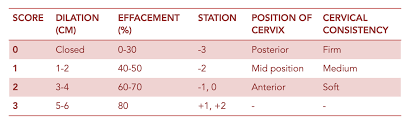
How Is the Bishop Score Calculated?
Each of the five categories receives a certain number of points. The total possible score typically ranges from 0 to 13.
Here is how scores are generally interpreted:
8 or higher: The cervix is considered favorable. The chances of a vaginal birth with induction are similar to spontaneous labor.
6 or lower: The cervix is considered unfavorable. Cervical ripening methods are usually recommended before starting induction medications.
7: This falls into a gray area.
Many studies have found that higher Bishop scores are associated with a higher chance of vaginal birth with induction. Lower scores are associated with a higher chance of Cesarean when induction is attempted.
Important Limitations of the Bishop Score
The Bishop score is helpful, but it is not a crystal ball.
Research shows that it is not a strong predictor of vaginal birth when scores fall in the middle range, especially 4, 5, or 6.
Another major limitation is that most calculators do not account for whether you have given birth before.
Having had a prior vaginal birth is one of the strongest predictors of a successful induction. Some providers add two extra points to the Bishop score for people who have previously had a vaginal birth.
So while the Bishop score matters, it is only one piece of the overall picture.
Why This Matters When Induction Is Being Suggested
Here is where this becomes powerful.
If your provider is recommending induction at 39, 40, or 41 weeks, and your Bishop score is low, that means your cervix is not yet ready.
Starting an induction with an unfavorable cervix often means:
Longer inductions
More interventions
Increased likelihood of needing multiple medications
Higher risk of Cesarean compared to starting with a favorable cervix
This does not mean you should never induce with a low Bishop score. Sometimes medical situations require it.
But it does mean you deserve to understand what your body’s starting point is before making that decision.
The Question to Always Ask
When induction is brought up, ask:
“What is my Bishop score?”
“Is my cervix favorable?”
“What are my options if we wait?”
This shifts the conversation from fear-based timelines to body-based readiness. Also using the BRAINS framework to understand your choices helps reduce your risk for birth trauma or regret.
At Breezy, this is something our birth doulas consistently ask about when supporting families through induction decisions. Because informed consent requires real information, not just a date on the calendar.
The Bottom Line
The Bishop score helps determine whether cervical ripening is needed before induction.
A higher score generally means a smoother induction.
A lower score may mean your body needs more preparation.
It is not the only factor that matters. But it is a meaningful one.
Before agreeing to an induction, know your number and make an informed choice.