How Partners Can Help During Labor
When people picture birth support, they often think of the birthing person doing all the work.
But in reality, your partner plays a huge role in how supported, safe, and grounded you feel during labor.
Contractions are intense, but they are also purposeful. Having the right kind of support during each surge can help you stay regulated, conserve energy, and move through labor more efficiently. Here are some ways partners can help.
What to Say During Contractions
Words matter more than you might think in labor.
During contractions, your brain is in a more instinctual state. Short, simple and reassuring phrases are often the most helpful.
Things like:
I’m right here
Breathe with me
You’re safe
These reminders help bring you back into your body and reinforce a sense of safety.
What matters most is tone. Calm and steady communication can help regulate the entire environment.
Sometimes, less is more.
Avoid:
Rushing or creating urgency
Minimizing what they’re feeling
Adding pressure or too many instructions
If you’re unsure what to say, your presence alone is enough.
Support the Nervous System
Labor is very connected to the nervous system.
When the body feels safe, labor tends to flow more smoothly. When there is tension or stress, labor can feel harder or even slow down.
Partners can support the nervous system by:
Speaking calmly
Breathing slowly alongside them
Relaxing their own body- tension translates in your touch and movements, so relaxing your own body helps
Staying physically and emotionally close
Your calm presence can help their body stay open and responsive.
Simple reassurance goes a long way.
Physical Support During Contractions
Hands-on support can make a huge difference in how contractions feel.
Some of the most effective techniques include:
Counter pressure on the lower back
Hip squeezes
Gentle massage
Using a rebozo for movement and support
Breathing together through each surge
These techniques help relieve pressure, especially if there is back discomfort, and give your partner something tangible to focus on.
You don’t have to do everything perfectly. Follow their cues and adjust as needed.
Being the Advocate
One of the most important roles a partner can play is helping protect the birthing space.
This doesn’t mean speaking over the birthing person. It means supporting their voice and helping create space for informed decisions.
Some ways to do this:
Ask, “Is this an emergency?”
Use the BRAINS framework when decisions come up
Help slow things down if everything feels rushed
Ask for space when needed
A Simple but Powerful Tool
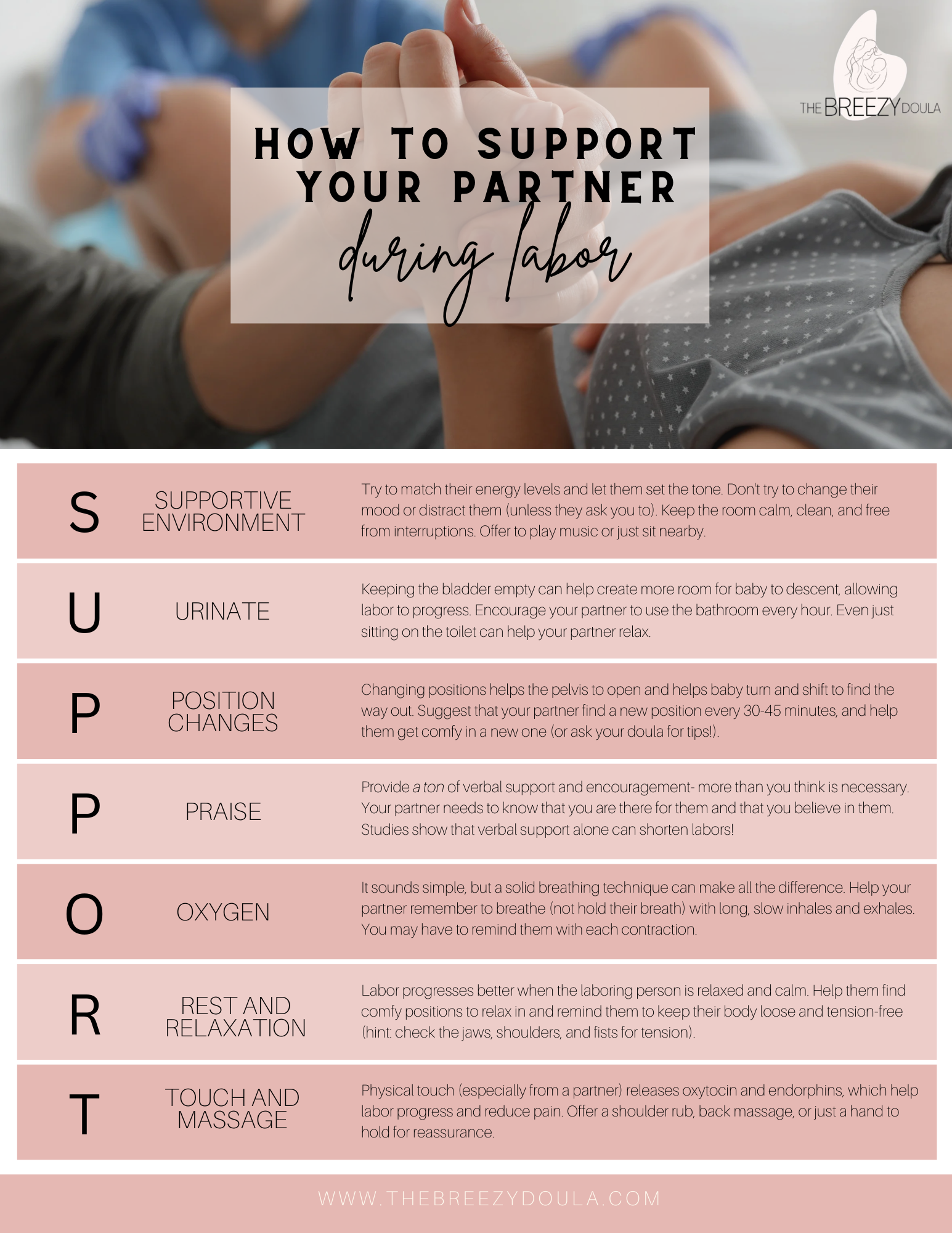
We always recommend physically giving your partner a simple guide (like this one) before labor begins.
Having something they can glance at in the moment can help them feel more confident and grounded in how to support you.
How Birth Doulas Support You Both
One of the biggest misconceptions is that doulas replace partners. That’s not what we do.
Doulas support the entire birth team.
We help guide partners in real time so they don’t have to guess what to do. We offer suggestions, demonstrate techniques like hip squeezes or positioning, and help create a calm, supportive environment for both of you.
We also help partners take breaks when needed, step in when things feel overwhelming, and make sure no one is carrying the full weight of support alone.
Your partner brings love and connection. We bring experience and guidance. Together, that combination creates a powerful, supported birth experience.