Do You Know the Signs? Early Labor Signs Every Expecting Mom Should Know
As your due date approaches, it's completely normal to start analyzing every cramp, every trip to the bathroom, and every new sensation.
"Was that a contraction?"
"Did my water just break?"
"Am I in labor?"
The truth is that labor rarely starts like it does in the movies. There is usually no dramatic rush to the hospital. Instead, labor often gives subtle clues that your body and baby are getting ready. And perhaps the most important thing to remember:
There is no exact timeline.
Some signs mean labor could be hours away. Others can happen days or even weeks beforehand. Every mom and every baby have their own rhythm.
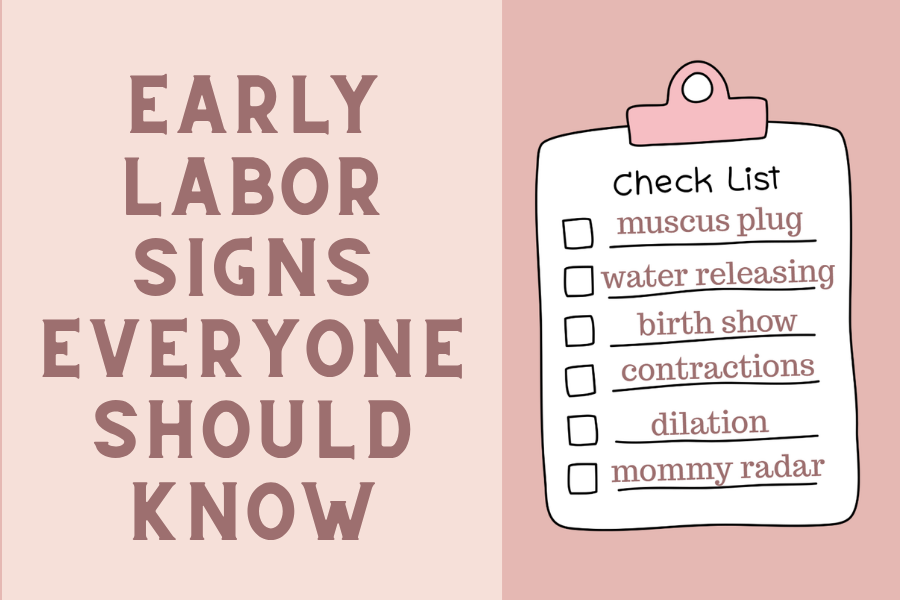
Losing Your Mucus Plug
One of the most common signs moms hear about is losing the mucus plug. Think of the mucus plug as the "cork of the uterus." Throughout pregnancy, it acts as an antibacterial barrier that protects the entrance to the uterus.
What Does It Look Like?
Honestly, it can look like a big snot.
It may appear as:
A jelly-like glob
Thick mucus
Stringy discharge
Some moms lose it all at once, while others lose it little by little over several days. It can even be so subtle that you miss it when wiping.
Does Losing the Mucus Plug Mean Labor Is Starting?
Not necessarily. Labor may begin within hours, days, or even weeks.
And here's something many people don't realize: The mucus plug can regenerate if your body isn't quite ready yet.
What About Pink or Red Streaks?
You may notice some pink or blood-tinged mucus, often called the "bloody show or birth show."
This comes from tiny blood vessels breaking as the cervix begins to soften, thin, and open. This is a good sign because we like to see cervical changes “thinning and opening.”
Light spotting from cervical change is normal. Bright red bleeding, however, should always be reported to your provider. This can still be a normal sign of labor, but your provider would likely want to keep an eye on it.
You Can Be Dilated for Weeks
Many moms are surprised to learn that cervical dilation doesn't come with a countdown clock.
You might be:
1 cm for weeks
2 cm for weeks
3 cm for weeks
Or you might go from 1 cm to holding your baby in a matter of hours. There is no timeline. Cervical exams only tell us what is happening in that moment. They do not predict when labor will begin.
Contractions Start Finding a Pattern
One of the biggest signs that labor is truly beginning is that contractions start developing a rhythm. They may still be somewhat irregular at first, but there is usually an average timing between them.
Over time, they become:
Stronger
Longer
Closer together
The Hospital's 5-1-1 Rule
Many hospitals recommend coming in when contractions are:
Every 5 minutes
Lasting 1 minute
Continuing for 1 hour
This is known as the 5-1-1 rule.
Our Doula Team Loves the 3-1-1 Rule
At The Breezy Doula, we often encourage families, especially first-time parents, to labor at home as long as possible if they live close to their birth place and everything is progressing normally.
For many families, we prefer the:
3 minutes apart
Lasting 1 minute
For 1 hour
3-2-1 rule.
First labors can take time, and early admission to the hospital can sometimes lead to unnecessary interventions. Staying home where you feel safe, comfortable, and relaxed often allows labor to unfold more naturally.
Of course, every family is different, and we always encourage listening to your provider and your own instincts.
BIrth show (bloody show)
The birth show is another common sign that labor may be approaching.
As the cervix changes, small blood vessels break and create:
Pink discharge
Brown discharge
Red streaks mixed with mucus
This is usually completely normal and simply reflects cervical change. Seeing blood is okay. As labor progresses, there may be more that release. Just keeping an eye on how much gives your provider more information to where you are in labor.
A Doula Tip
Place disposable chuck pads/ puppy pads:
On your side of the bed
On the passenger seat of your car
On your favorite spot on the couch
They're inexpensive and can save you from having to clean upholstery later. Trust us. Future you will appreciate it.
Water releasing (Water breaking)
Hollywood loves this sign, but surprisingly, water breaking is not usually the first sign of labor.
For some moms, it happens before contractions begin. Give yourself 24 hours for contractions to come on.
For others, it happens during active labor.
And some babies are even born in their bag of waters!
What Does It Feel Like?
It often feels like you've peed yourself, except you have no control over it.
It can be:
A large gush
A steady trickle
Small leaks that continue over time
If you think your water has released, we recommend remembering the acronym:
TACO (Time, amount, color, odor)
Time
What time did your water release?
Amount
Was it a gush or a trickle?
Color
Normal fluid is usually:
Clear
Slightly pink
Sometimes the fluid may appear green or brown. This is called meconium, which is baby's first poop. Meconium doesn't automatically mean something is wrong.
Many babies simply poop before birth. However, it is considered a yellow flag that tells providers to keep a closer eye on baby during labor.
Odor
Amniotic fluid is usually odorless or has a mild, sterile smell.
A stronger odor can sometimes occur with meconium or infection, which is important information to share with your provider.
Trust Your Mommy Radar
Sometimes none of these signs are obvious. And sometimes, moms simply have a feeling.
As doulas, we often hear:
"I can't explain it, but I just feel like I need to get checked."
We call this your mommy radar. If something feels different, listen to your body. You are never bothering your provider. You are never overreacting. Intuition matters.
How Birth Doulas Support Early Labor
Early labor is exciting. It's also emotional and sometimes confusing. Many families spend hours wondering:
"Is this it?"
As birth doulas, we help guide families through those early hours by:
Helping you determine whether labor is progressing.
Providing comfort measures.
Encouraging rest and relaxation.
Helping partners know how to support you.
Keeping the environment calm and grounded.
Supporting movement and positioning.
Helping you labor comfortably at home.
Remaining relaxed during early labor can actually help labor progress. Excitement is wonderful, but staying calm allows your body to produce the oxytocin needed for contractions to become efficient.
The Bottom Line
There is no perfect checklist that tells you labor is exactly twelve hours away. Losing your mucus plug, spotting, contractions, and even being dilated are all signs that your body is preparing. But labor doesn't follow a schedule. Your body and your baby know what they're doing. And when those signs start appearing, you don't have to navigate them alone.
Our doulas are here to help you feel supported, informed, and confident every step of the way.